


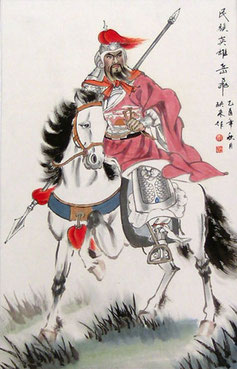
The Eagle Claw system evolved from Elephant style kung fu, a system of hand techniques with heavy, fixed stances. It was adapted into the “108 Fighting Techniques”, a system of handwork and grappling, by Ngok Fei, who had learned the style from the monk Jow Tong at a Sil Lum monastery. Said to be the most brilliant general of the Southern Song dynasty (1127-1279 AD), Ngok Fei was not only an excellent strategist, but also a scholar. He inspired discipline among his troops, won the support of the people, and always showed moral integrity and loyalty to the Emperor.
The Southern Song dynasty was at war with the Jurchen, ancestors of the Manchus (rulers of China from 1644-1912). After control of northern China had been lost, the Song court fled to the south and set up a capital in Hang Chow. Ngok Fei was general of a large army situated between the new capital and the lands occupied by the invaders. He led many offensives into northern China, defeating the Jurchen every time, and reclaiming much of the lost territory. He won victory after victory, not only because he was a clever tactician, but also because of Ying Sao (Eagle Hand), the kung fu system based on the 108 Fighting Techniques that he taught to his troops.
But the Song dynasty Emperor was weak, the regime shaky. The Prime Minister, Ch'in Kwei, was working on a peace settlement with the Jurchen, and Ngok Fei's success and popularity were jeopardizing the process. The Prime Minister falsely accused Ngok Fei of insubordination and convinced the Emperor to order him back to the capital. Ngok Fei knew he was bing framed, and refused to obey. Three times he disregarded the imperial command. Finally the Emperor sent him a "gold edict”, an order that could not be ignored under penalty of death. Ngok Fei had no choice; he went back to the capital. There, he was immediately thrown into prison, then murdered.
Enraged by the grossly unfair punishment he had suffered, Ngok Fei's troops disbanded, but continued training on their own, spreading Ying Sao all around the country. The style finally made its way back to the Sil Lum monastery, where it was practiced and passed on in much the same form as created by Ngok Fei.
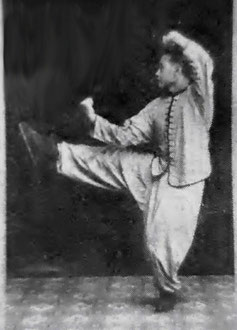
Centuries later, during the Ming dynasty, a monk and master of kung fu named Lai Chin saw Ying Sao, and recognized the value of the strong hand and locking techniques. He decided to incorporate them into his own system, Faan Tzi, which was famous for intricate legwork, high kicks and acrobatic jumps. Thus, Faan Tzi Ying Jow Moon was born. Today it is known as the Northern Eagle Claw system.
A Ming dynasty nobleman named Toa Jai learned the Northern Eagle Claw system as part of his martial arts training. While he was still young, the Ming dynasty was overthrown, replaced by the Ching. Fearing revolt by people still loyal to the Ming, the Ching dynasty forbade the practice of all martial arts. Toa Jai still practiced in secret, and passed the system on to Far Shing, who passed it to Lau Shu Chun. At that point, the Northern Eagle Claw system came to be regarded as a treasure of the Lau family, and for many years was only taught to Lau family members. Lau Shu Chun passed the system to Lau Shing Yao, who trained not only his son, Lau Kai Man, but also Chan Tzi Ching, his sister's son. Lau Kai Man passed the system to Lau Fat Man.
Chan Tzi Ching founded the Ching Mo Kung Fu Association in Shanghai with his friend, Fawk Yun Gop. After establishing several Ching Mo gymnasiums around China, Chan Tzi Ching began teaching at the Hong Kong branch. When he left, he entrusted the Hong Kong Ching Mo Association to Lau Fat Man.
Lau Fat Mon taught at the Hong Kong Ching Mo Association for a couple of years. In 1931, assisted by his students Yiu Kin Wah and Ng Wai Nung, he established a very successful Ching Mo branch in the village of Wong Jong. During the Sino-Japanese War, Lau Fat Man taught in the army in Canton. After the war he remained there, serving as a government official. In 1949, he returned to Hong Kong, where he established his own Eagle Claw school. He was largely responsible for the spread of the Eagle Claw System throughout Southern China.
Ng Wai Nung studied the Northern Eagle Claw system with both Chan Tzi Ching and Lau Fat Man. He followed Lau Fat Man for many years and taught at his schools. Later, during World War II, there was much unrest in the country, and he returned to his home village. Because of the national turmoil, many people wanted to learn kung fu. Ng Wai Nung began teaching in three villages and became well known in the region. After the war he returned to Hong Kong, where he taught Eagle Claw and Wu style tai chi to many students, including his godson, Shum Leung.




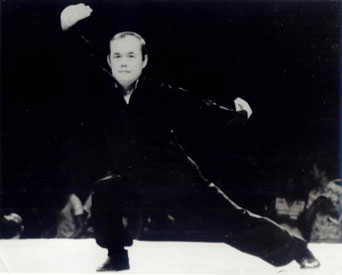
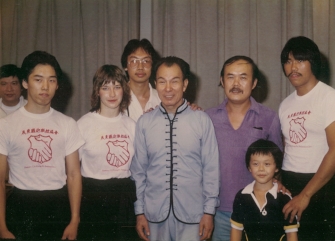
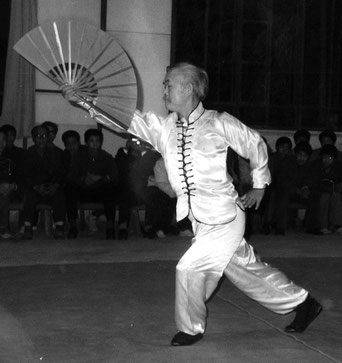
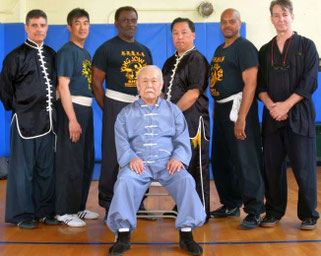

HISTORY OF SHUM'S EAGLE CLAW KUNG FU
In 1974, Sifu Shum opened his first school in New York on 28th Street. It remained there for five years, and his students performed extensively during
that time. The first year, they went to Washington, D.C. to take part in a competition sponsored by Dean Chin, and to Puerto Rico to participate in a demonstration. Later, performances
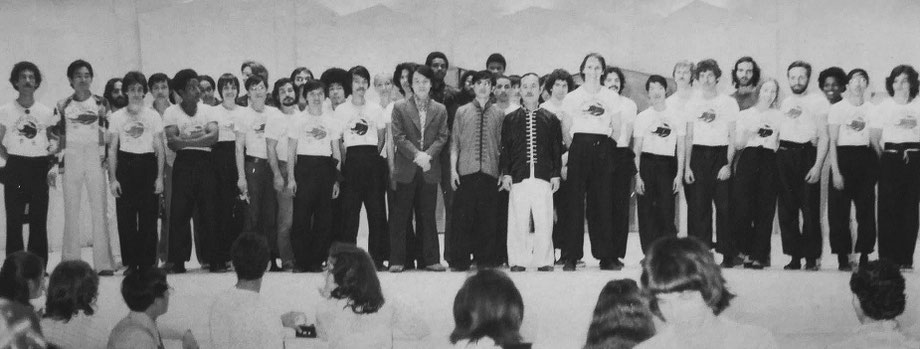
took place at Madison Square Garden and Town Hall, both in New York City. In 1975, less than one year after the opening of the school, thirty Eagle Claw students organized demonstrations in New
York's Lincoln Center, Staten Island College and Queens College. That year, Eagle Claw students also performed at several events in Boston, including the opening of the Boston branch of
the Eastern U.S. Kung Fu Federation.

In 1979 the school moved to a larger space at 34th Street and 9th Avenue, where it stayed for nine years. Even in the new location, classes were crowded and had to be split into early and late sessions. Every day, up to twenty new people would come in to observe classes, many of them eventually enrolling. A large number of students came to train with Sifu Shum from other countries, including Korea, Germany, Great Britain and The Netherlands.
With so many students, Sifu Shum started to train a number of his senior students, including Cecil Jordan, Benson Lee, David Chin, Mark Shan and Peter Armstrong, to teach beginners. It was also during that time that Sifu Shum's first book, Eagle Claw Kung Fu: Classical Northern Chinese Fist, was published, which drew even more students to the school. Some outstanding Eagle Claw students such as Benson Lee, who won the title of Grand Champion several times for forms, and Cynthia Rothrock helped spread the name and fame of the Northern Eagle Claw system.
Sifu Shum held a Chinese New Year party at the school every year. Performances opened with Southern (and later, Northern) lion dancing and continued with demonstrations of Eagle Claw fist forms, various weapons, partner forms and tai chi forms. Because Sifu Shum required the best from his students, and they were willing to spend long hours rehearsing, the New Year's performances were outstanding. Many sifus from other schools and their students were also invited to perform. The audience, students, family members, friends, and visitors regularly exceeded four hundred persons.
The school moved to a larger space on 14th Street in 1986. Because of the volatile real estate market in New York City, in the decades following, it moved several times to various downtown Manhattan locations, and is currently in Chinatown.
In 1996 Grandmaster Shum appointed Sifu Gregory Vasilakis as Master Instructor and head of the Ying Jow Pai European Headquarters of Shum's Eagle Claw Kung Fu and Wu Style Tai Chi Chuan.